The New Payments Stack in Latin America: What Online Store Owners Must Do in 2026
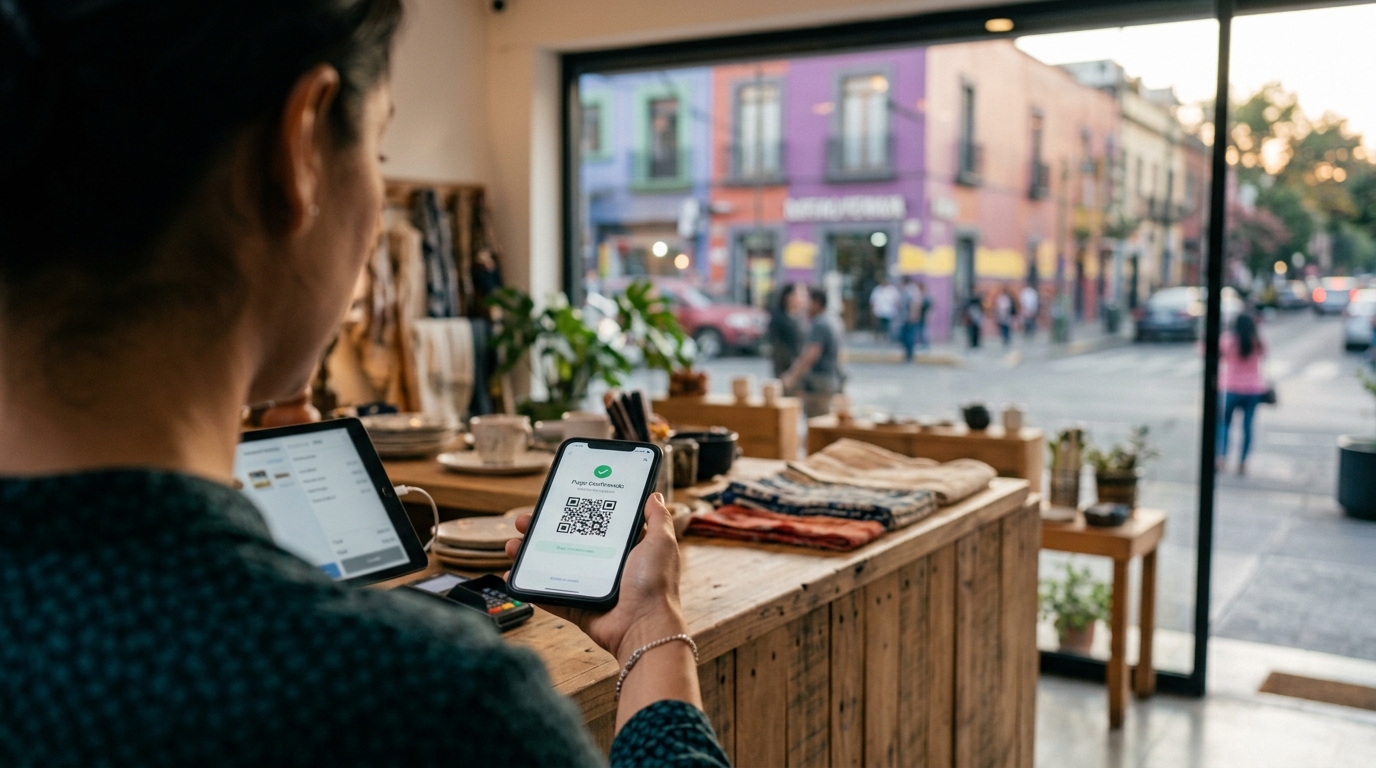
Five years ago, running an online store in Latin America meant one thing: pray the customer had a credit card, and pray harder that the bank did not decline it. In 2026, that model is dead. Brazil's Pix now processes more transactions than credit and debit cards combined. Costa Rica's SINPE Móvil moves over $30 billion a year between phones with no card at all. Mexico's CoDi is being force-adopted by Banxico. And a growing share of cross-border e-commerce is settling in USDC stablecoins because it clears in seconds instead of days.
If your checkout still only shows "Visa / Mastercard," you are not just missing sales — you are actively telling half your market you do not want their money. Here is what actually changed, and what to do about it.
From cards to instant rails: the real shift
The story of LATAM payments is no longer about "banked vs. unbanked." It is about instant, account-to-account (A2A) rails replacing card networks entirely. Pix in Brazil settles in under 10 seconds, 24/7, at essentially zero cost to the merchant. SINPE Móvil in Costa Rica does the same using just a phone number. Mexico's SPEI and CoDi, Colombia's Bre-B (launched by Banco de la República in 2025), and Argentina's Transferencias 3.0 all follow the same pattern.
For an online store owner, this is huge. Card processing typically costs 3.5%–5.5% in the region once you add gateway, acquirer, IVA, and chargeback risk. Instant rails often cost under 1% — and in some cases, nothing. On a store doing $20,000/month in sales, that is up to $900 back in your pocket every month, just from letting people pay the way they already prefer.
The new payment mix your checkout needs
There is no single "winning" method anymore. There is a stack. A serious LATAM checkout in 2026 should support the local instant rail, at least one wallet, cards for tourists and cross-border buyers, and increasingly a stablecoin option for high-ticket or B2B orders.
- Instant rails: Pix (Brazil), SINPE Móvil (Costa Rica), CoDi/SPEI (Mexico), Bre-B (Colombia), Transferencias 3.0 (Argentina).
- Regional wallets: Mercado Pago, Nubank, Ualá, PicPay — huge trust with younger buyers.
- Local acquirers: Tilopay and Onvopay in Costa Rica, dLocal and EBANX for cross-border, Kushki for Andean markets.
- Buy Now Pay Later: Kueski, Nelo, and Addi are converting hesitant buyers on tickets above $100.
- Stablecoins: USDC on Polygon or Base for freelancers, B2B, and cross-border customers who are tired of losing 8% to FX.
Why "just install a plugin" is not the answer
Shopify and WooCommerce plugins exist for most of these methods, but they are built for a global merchant, not for a Costa Rican boutique or a Colombian D2C brand. They frequently break on local edge cases: SINPE confirmation numbers that arrive as SMS, Pix QR codes that need to expire and regenerate, tax invoice (factura electrónica) integrations that Hacienda or DIAN require by law, or Mercado Pago's split-payment logic.
What happens in practice is that the store owner ends up with three plugins fighting each other, an inventory system that does not know a Pix payment came in, and a manual reconciliation spreadsheet at the end of every day. That is not a checkout — that is a second job.
What a modern LATAM checkout actually looks like
The stores that are winning in 2026 have a checkout that does four things at once: it detects the buyer's country and shows the right method first, it confirms the payment in real time via webhook (not by asking the customer to upload a screenshot), it auto-generates the electronic invoice, and it updates inventory and shipping in the same transaction.
This is exactly the kind of problem that no-code platforms cannot solve cleanly. It requires a custom checkout layer talking to multiple payment APIs, a webhook handler that reconciles in real time, and a database (we use Supabase) that acts as the single source of truth across payments, orders, and inventory. Built on Next.js and deployed on Vercel, this stack can be shipped in 2–3 sprints — meaning you have a working, revenue-generating checkout in under a month, not a six-month "digital transformation project."
What to do this quarter
You do not need to boil the ocean. Start by looking at your last 100 abandoned carts and ask a simple question: how many of those buyers would have completed the purchase if Pix, SINPE, or Mercado Pago had been the first option? Then map your top two payment methods to your top two customer countries. Add a third for cross-border. Wire them into a real webhook-based confirmation flow so nobody is copy-pasting transfer receipts into WhatsApp anymore.
The merchants who treat payments as infrastructure — not as a plugin — are the ones capturing the growth. Latin American e-commerce is projected to cross $200 billion in 2026, and the winners will not be the ones with the prettiest product photos. They will be the ones whose checkout says "yes" the fastest, in the currency and rail the customer already trusts.